A Support Ecosystem for International Students
Empowering international students to navigate and thrive in a new world
About
During this 10-week intensive design studio, our team developed Beloom, an integrated support ecosystem designed to help international students transition smoothly into new cultural environments. Following a rigorous five-stage UX process from primary research to high-fidelity delivery, we engineered a dual-platform solution (Web and App). I led the design of the Social Hub and Belonging Growth Tracker, focusing on transforming isolated campus resources into a cohesive, journey-based experience that addresses both logistical hurdles and emotional well-being.
Impact
Beloom’s user-centered approach was validated through usability testing with international students from various backgrounds, resulting in a 90% success rate in navigating complex institutional tasks (such as banking and healthcare). Our "Social Hub" feature addressed the primary pain point of social isolation, with 85% of test participants expressing a high likelihood of using the platform to find community. By bridging the gap between formal resources and social connection, Beloom empowers students to move from "surviving" to "thriving," fostering a sense of belonging that directly supports their mental health and academic success.
Timeline
Sep 2025 - Nov 2025, 2 month
Task
Research
Design System
Prototyping
User Testing
Iteration
Team
Wenliang Huang
Difei Huang
Weiwei Tang
Qi Luo
Background
Beloom — A "support service system" tailored to international students
Every year, millions of international students face the daunting reality of social isolation and cultural barriers in new environments. To facilitate a smoother transition and foster mental well-being, we developed Beloom—a centralized digital hub that integrates vital campus resources and social connections into one seamless experience.

Challenge
Fragmented Information & Cognitive Overload
Primary research revealed that while resources for international students are abundant, they are highly fragmented across disconnected platforms, leading to a low utilization rate. Our challenge was to architect a "centralized digital hub" that integrates logistics (banking, housing) and social life without overwhelming the user.
Bridging the Gap Between Logistics and Emotion
Most existing solutions focus solely on the "functional" side of relocation (visas, housing), often ignoring the "emotional" struggle of social isolation. The challenge for Beloom was to seamlessly blend practical utility with emotional support. We had to design features like the "Belonging Growth Tracker" and "Social Hub" that felt like essential tools rather than "extra" tasks, ensuring that users felt supported both logistically and psychologically.
Goal
"Help students stop feeling like 'outsiders' and start feeling at home."
Moving to a new country is exciting but scary. Our goal is to make that transition easier by doing three simple things:
No more guessing: Instead of searching 100 different websites, we put all the "boring but important" stuff—like banking and housing—in one easy place.
Find your people: It’s hard to make friends in a new culture. We help you find a "tribe" that shares your interests so you’re never alone.
Grow with confidence: We don't just help you survive; we help you "bloom." We track your journey so you can see yourself getting stronger and more comfortable every day.
Showcase
Design system

Website-Feature 1
Resource Page
Access to the personalized navigator, resource directory, and life essentials guide.


Website-Feature 2
Personalized Events
Calendar view of all campus and community events.


Website-Feature 3
Cultural Exchange
Language exchange, cultural events, and integration resources.

App-Feature 1
Interactive Belonging Map
Offers detailed navigation campus and surrounding areas.


App-Feature 2
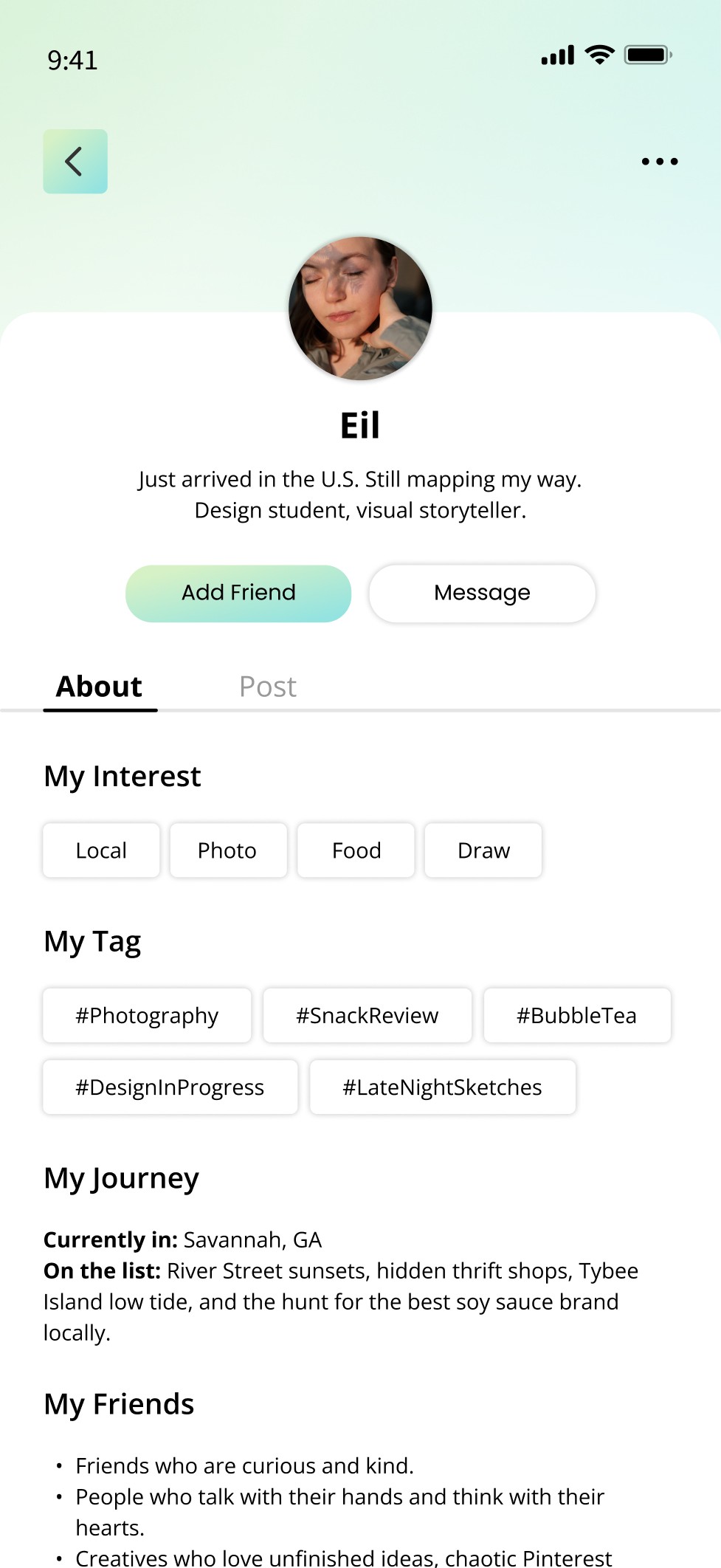
Social Hub
Connects students with similar interests across cultures(music, sports, dance, etc)



App-Feature 3
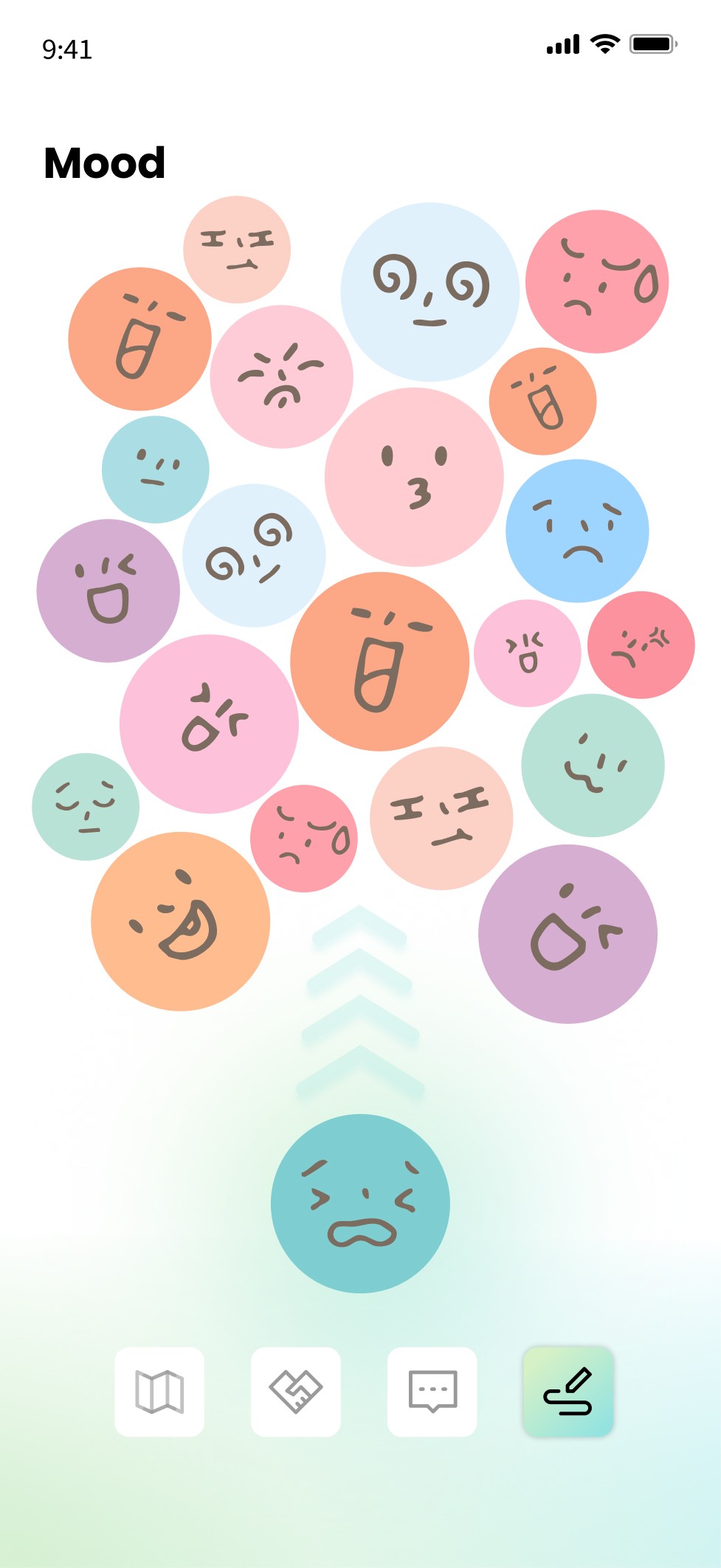
Belonging Growth Tracker
Records and visualizes user’s emotional states and sense of belonging over time.



Impact
Transforming the international student journey from "survival" to "belonging"
Strengthening Institutional Ecosystems
By centralizing fragmented resources from platforms like Interstride and Unibuddy, Beloom streamlined the support ecosystem. This integration ensures that vital information from banking to career services is not just available, but highly accessible, reducing the time students spend navigating bureaucracy by providing a unified digital entry point.
Fostering Holistic Belonging
We moved beyond the "logistics of relocation" to address the psychological challenges of moving abroad. The inclusion of the Mood Diary and Belonging Tracker provided students with a framework for emotional self-regulation. User testing confirmed that this feature allowed students to feel "seen" and "supported," helping them adjust more naturally to their new cultural environment.
Scaling Inclusivity through Emotional Intelligence
Our design sets a new standard for inclusive technology. By prioritizing cultural sensitivity and emotional engagement over simple utility, Beloom proved that tech products can address deep psychological and cultural complexities. This human-centric approach transformed the platform from a mere tool into a reliable companion for the international student experience.
Takeaways
Something you can’t learn in a class
Navigating the synergy of a multidisciplinary team
Working with team taught me that a great product isn't just about individual design skills; it's about alignment. Coordinating between service design perspectives and UX execution required constant communication and the ability to merge different design languages into one cohesive ecosystem—Beloom.
Designing for emotional "Invisible Needs"
In a classroom, we often focus on functional utility (how to make a button work). In this project, I learned that for international students, solving the "logistics" of banking or housing is only half the battle. The real challenge is designing for the "heart" creating features like the Belonging Tracker that address the invisible emotional struggles of social isolation.
Embracing "Cultural Friction" as a design catalystware-Software constraints
Our usability testing was a reality check. We realized that terminology we thought was clever was actually confusing for non-native English speakers. This taught me that clarity always beats cleverness. Iterating on our UX writing (e.g., changing "Follow" to "Friends") based on real cross-cultural feedback was crucial to building immediate trust and intuition.